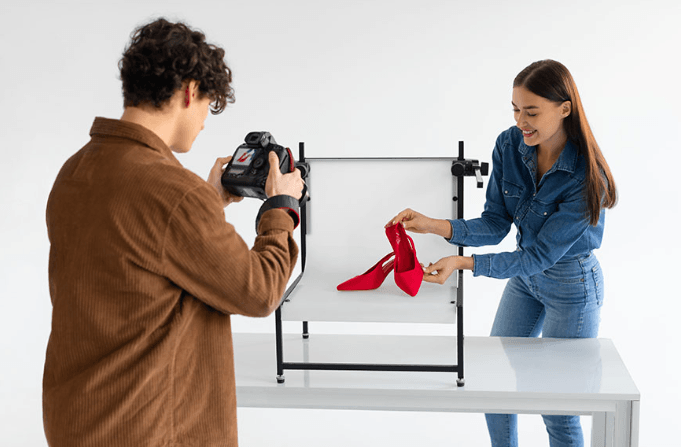
In online retail, customers cannot physically touch or examine a product before making a purchase. This makes visual presentation one of the most important parts of the digital shopping experience. Clear, attractive, and informative images can help shoppers understand what a product looks like, how it is presented, and whether it fits their expectations.
For businesses operating in competitive markets, professional visual production can therefore become an important part of their content strategy. From product photography and lifestyle imagery to short videos and social media assets, high-quality visuals can help brands communicate more effectively across different digital channels.
Why Product Photography Matters
Product photography does more than simply show an item against a background. It provides customers with visual information that may influence how they understand the product.
A well-planned image can show details such as shape, colour, texture, dimensions, materials, and design features. Consistent photography across a product catalogue can also make an online store appear more organized and professional.
For e-commerce businesses with many products, maintaining a consistent visual style is particularly useful. Customers can move from one product page to another while experiencing a recognizable brand presentation.
Creating Consistency Across a Product Catalogue
Consistency is often overlooked when businesses produce product images individually. Different lighting conditions, backgrounds, camera angles, or editing styles can make products appear unrelated.
A professional production process can establish visual guidelines for the entire catalogue. These may include background treatment, lighting direction, framing, image dimensions, and styling.
This consistency can be especially valuable for retailers with large product ranges. Whether customers are viewing clothing, accessories, home goods, electronics, or beauty products, a unified presentation creates a more coherent shopping environment.
Beyond Traditional Product Images
While standard product photography remains useful, modern brands often need several different types of visual content.
A product may require:
- Standard catalogue photography
- Lifestyle photography
- Model photography
- Flat-lay images
- 360-degree views
- Short product videos
- Social media content
- Brand introduction videos
Each format serves a different purpose. Catalogue images can provide product information, while lifestyle images can demonstrate how an item may look in a real environment.
Short videos can also show movement, functionality, packaging, or other details that are difficult to communicate through a single still image.
Planning Visual Content Before the Shoot
A successful photography project normally begins before the camera is switched on. Planning helps determine what content is actually required and prevents important shots from being missed.
Businesses can begin by identifying the platforms where the content will be used. Product pages, marketplaces, social media platforms, digital advertising, and company websites may all have different requirements.
A content plan can then define the required image formats, aspect ratios, backgrounds, props, models, and video concepts.
This approach makes the production process more organized and can reduce the need for unnecessary reshoots.
The Role of Professional Equipment
Equipment can influence the consistency and quality of commercial visual production. Lighting, cameras, backgrounds, styling tools, and automated photography systems can all contribute to a more efficient workflow.
However, equipment alone does not create effective content. Experienced photographers, videographers, stylists, art directors, and editors are also important because they understand how to use technical resources according to the creative requirements of a project.
The combination of appropriate technology and an experienced production team can help brands produce a larger volume of content while maintaining consistent standards.
Combining Photography With Video
Video has become an important part of digital commerce and social media marketing. A short product video can communicate movement, scale, texture, or functionality in ways that a still image cannot.
Short-form videos can also be adapted for different online platforms. For example, a brand may create concise product demonstrations for social media while using more detailed video content on its website.
The key is to keep each video focused. A short clip does not need to communicate every feature of a product. Instead, it can highlight one or two useful characteristics that help viewers understand the item.
Visual Content for Social Media
Social platforms are highly visual environments, so brands need content that can capture attention quickly.
Photography can provide polished images for product announcements, campaigns, and promotional posts. Video can support tutorials, demonstrations, behind-the-scenes content, and short product features.
Rather than creating social media content separately from the main production process, businesses can plan additional assets during the same shoot. This can make better use of products, models, locations, and production time.
Supporting International E-Commerce
Brands selling across multiple markets often need visual content that works for different audiences. Product photography is particularly useful because images can communicate product characteristics without relying entirely on written language.
A single production project can potentially generate assets for websites, marketplaces, social media channels, and advertising campaigns in different regions.
For businesses manufacturing products in China, producing visual assets close to the manufacturing or supply chain can also simplify logistics. Products may be photographed before being shipped to another market, depending on the project’s requirements.
Measuring and Recording Product Information
Visual production can sometimes be combined with accurate product measurements. Dimensions and weight information can be useful for e-commerce listings, logistics planning, packaging, and catalogue management.
Recording this information during the content-production process can help reduce the need for separate measurement activities later.
For businesses managing a large number of products, integrating these steps into a broader workflow may make content operations more efficient.
Choosing a Production Partner
When selecting a professional photography or video production studio, businesses should consider more than image quality alone.
Useful factors include:
- Experience with commercial and e-commerce projects
- Available photography and video services
- Production capacity
- Editing capabilities
- Ability to handle large product catalogues
- Understanding of different digital platforms
- Communication and project management
- Ability to create different visual formats
It is also helpful to review previous projects and determine whether the studio’s production style matches the brand’s requirements.
Building a Long-Term Content Strategy
Visual production should not always be treated as a one-time project. E-commerce brands continuously introduce products, update campaigns, and create new marketing materials.
A long-term content strategy can help businesses plan photography and video requirements around product launches, seasonal campaigns, promotional periods, and social media calendars.
By thinking about content needs in advance, brands may be able to reuse visual assets across multiple channels instead of creating completely new material for every campaign.
Three Common Questions
1. Why is professional product photography important for online stores?
Professional photography can present products clearly and consistently while helping customers understand their appearance, details, and design before purchasing.
2. Should e-commerce brands use both photos and videos?
Photos and videos serve different purposes. Images are useful for product catalogues and detailed product presentation, while videos can demonstrate movement, functionality, or usage.
3. How can brands create content for multiple platforms?
Brands can plan the production around different formats and aspect ratios from the beginning. A single organized shoot can potentially generate product images, lifestyle visuals, short videos, and social media assets.
Conclusion
Strong visual content can play an important role in modern e-commerce. Professional photography provides clear product presentation, while video and other creative formats give brands additional ways to communicate with customers.
The most effective approach begins with planning. By identifying the required platforms, formats, products, and creative direction before production, businesses can create content that is more consistent and easier to use across different marketing channels.
For brands looking for professional production support in China, a dedicated photo studio Shanghai can provide a structured environment for producing product photography, videos, and other visual assets needed for modern digital commerce.
